

By Team: ceramics-international | Date: June 29, 2026
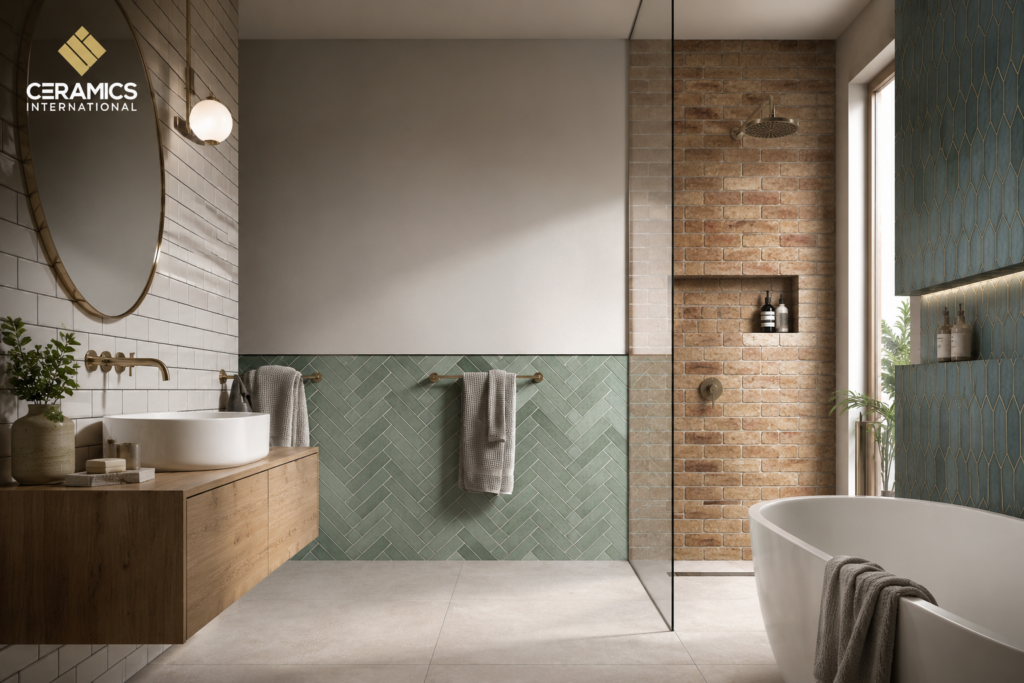
Two bathrooms can have the same colour palette, the same fixtures and even the same bathroom design with subway tiles, yet feel completely different.
In this guide, we’ll go through a range of bathroom tile design ideas, showing how the right tiles can bring everything together.
Why Tile Choice Has A Big Impact On Bathroom Design
How Colour, Shape and Layout Influence the Overall Look
Colour is often the first thing people notice, but shape and layout do just as much work. Slim formats like subway tiles for bathrooms create clean lines, while stacked or staggered layouts shift how structured or relaxed the wall feels.
Balancing Style, Practicality and Bathroom Size
What looks good also needs to work in the space. Smaller bathrooms suit lighter colours and simpler layouts, while larger spaces can handle more contrast and detail without feeling crowded.
Why Subway Tiles Still Work So Well In Bathrooms
The Timeless Appeal of Subway Tiles
There’s a reason bathroom design with subway tiles has stayed popular. The shape is straightforward, the finish is clean and it works across both classic and more modern bathrooms without feeling dated.
Where Subway Tiles Work Best in Bathroom Spaces
Subway tiles are often used for bathroom shower wall tiles, splashbacks and full-height walls. They suit both larger layouts and small bathrooms, especially where keeping lines simple helps the space feel more open.
How to Make Subway Tiles Feel More Custom and Less Standard
Small changes can shift the overall look. Trying vertical stacking instead of a traditional layout, using darker grout or choosing modern bathroom subway tiles in softer tones can make the result feel more considered and less expected.
Using Brick-look Tiles To Add Texture And Character
The Difference Between Brick Tiles and Classic Subway Tiles
Subway tiles have clean, uniform lines, while brick-look tiles in a bathroom add surface variation. Subtle shifts in tone and texture can soften the space or add contrast.
Where Brick-look Tiles Can Create Impact in a Bathroom
Bathroom brick tiles work well in areas where you want to break up a flat wall. Shower recesses, vanity walls or a single feature section can all benefit from that added texture without taking over the entire room.
Pairing Brick-style Tiles with Modern Fixtures and Finishes
Pair brick-style tiles with simpler elements to keep the space balanced. Clean tapware, smooth surfaces and neutral tones let the texture stand out without adding clutter.
How Coloured Tiles Can Transform A Bathroom
Adding Warmth, Depth and Personality Through Colour
Using coloured bathroom tiles is one of the simplest ways to shift the tone of a space. Even a small section of colour can add depth and make the room feel more finished.
Choosing Between Soft Neutrals, Earthy Tones and Bold Accents
Soft neutrals keep the space calm and easy to work with over time. Earthy tones add warmth, while bolder colours can define areas or draw attention, depending on how much contrast you want.
Using Coloured Tiles Without Overwhelming the Space
With coloured tiles for bathroom walls, it usually works better to keep the colour contained. Using it in one area, like a splashback or feature wall, helps keep the rest of the space balanced and easier to work with.
Best Bathroom Layout Patterns For Subway And Brick Tiles
Classic Brick Pattern (Running Bond)
The running bond pattern is the most familiar layout and works in almost any bathroom. It creates a steady, balanced look that suits both subway and brick-style tiles.
Horizontal and Vertical Stack Layouts
Stacked layouts feel more structured and modern. Horizontal stacking can make a wall feel wider, while vertical stacking draws the eye up and can make the space feel taller.
Herringbone and Feature Patterns for Visual Interest
Herringbone layouts change the direction of the tile, adding movement without extra colour. These work well in shower areas or as a focal point behind a vanity.
Where To Use Brick, Subway And Coloured Tiles In A Bathroom
Shower Walls and Recesses
Shower areas are a strong place to add detail. Wall tiles can introduce texture or colour without taking over, while recesses are ideal for adding contrast.
Vanity Splashbacks and Feature Walls
A vanity wall is often the first thing you see when you walk into the room. Using bathroom splashback tiles here can create a clear focal point, especially when paired with a simpler finish across the other walls.
Full-height Walls vs Smaller Statement Areas
Full-height tiling creates a clean, continuous look that suits modern bathrooms. Smaller statement areas let you introduce bolder finishes in a more controlled way.
Choosing The Right Grout, Finish and Tile Size
How Grout Colour Changes the Final Look
Grout can either blend in or stand out. Matching grout softens the overall look, while contrast highlights the tile shape and layout.
Gloss vs Matte Finishes in Bathroom Design
Gloss finishes reflect light and can help brighten smaller spaces. Matte finishes feel softer and tend to hide marks better, which can make them easier to live with day to day.
Choosing Tile Size for Small and Large Bathrooms
Tile size affects how busy a space feels. Smaller tiles add detail, while larger tiles create a cleaner, more open look. This is especially important when working through small bathroom tile ideas.
Design Tips For Creating A Cohesive Bathroom Scheme
Mixing Feature Tiles with Plainer Floor or Wall Tiles
Feature tiles work best when they’re balanced. Pairing them with simpler bathroom tiles on floors or surrounding walls keeps the space from feeling crowded or too busy.
Coordinating Tiles with Timber, Stone-look and Metal Finishes
Tiles should connect with the rest of the materials in the room. Timber vanities, stone-look surfaces and metal fixtures all influence how the tile colours and finishes are perceived.
Creating Contrast While Keeping the Space Balanced
Contrast adds interest, but it needs to be controlled. Keeping one element consistent, like tone or finish, helps everything feel tied together rather than competing.
Common Mistakes To Avoid With Bathroom Feature Tiles
Using Too Many Competing Colours or Patterns
Mixing too many styles can make a bathroom feel cluttered. Limiting feature areas keeps the design clear and easier to read.
Ignoring Lighting, Grout and Maintenance Considerations
Lighting and grout both affect how tiles look once installed. Overlooking these details can change the outcome more than expected.
Following Trends Without Considering Long-term Appeal
Trends shift quickly. Choosing finishes that still feel right over time helps avoid needing to update the space too soon.
Explore Bathroom Tile Ideas At Ceramics International
Find Stylish Tile Options for Classic and Contemporary Bathrooms
From porcelain tiles to textured finishes and coloured options, there are plenty of ways to shape a bathroom that feels complete and well considered.
Visit the Showroom for Expert Design Guidance
Seeing tiles in person makes it easier to judge colour, texture and layout together. The Ceramics International showroom offers a range of bathroom wall tile ideas to help pull everything into place.
Looking to create a bathroom that feels stylish, practical and uniquely yours? Visit Ceramics International to explore subway, brick-look and coloured tile options or speak with our friendly team for expert bathroom design advice.