

By Team: ceramics-international | Date: August 20, 2026
Choosing bathroom tiles can quickly become more complicated than expected. Beyond colour and style, you need to think about where the tile will be used, how the bathroom is used day to day and what will be practical to live with over time.
For Perth homeowners planning a renovation, working through these decisions one at a time makes the process much easier. Here is what to consider when choosing bathroom tiles that balance style, practicality and budget.
Choosing Bathroom Tiles That Suit Your Lifestyle
Before comparing colours or finishes, think about who uses the bathroom and how often. A busy family bathroom has different needs from a guest ensuite, while shower floors and wet areas require more careful product selection.
Founded in 1982, Ceramics International has more than four decades of experience in tile selection and now serves second- and third-generation return customers.
Understanding the Difference Between Floor Tiles and Wall Tiles
Bathroom floor tiles and bathroom wall tiles are not always interchangeable.
Floor tiles need to be approved for floor use, while walls generally give you more freedom to explore decorative finishes, colours and patterns.
Some products may be suitable for both. When comparing floor tiles vs wall tiles, always check the intended application and technical specifications rather than choosing on appearance alone.
Choosing Tiles for Family Bathrooms, Ensuites and Guest Bathrooms
How you use the room should influence your tile choices.
For a family bathroom, everyday wear and ease of cleaning may be higher priorities. In an ensuite, you might focus more on creating a calm, cohesive space, while a guest bathroom can provide an opportunity to introduce a stronger colour, pattern or feature tile.
It also helps to consider adjoining rooms. Your bathroom does not need to match them exactly, but thinking about the wider colour palette and style can make the renovation feel more connected to the rest of your home.
Considering Wet Areas and Shower Floors
When choosing shower floor tiles, confirm that the product is intended for that use and check its relevant technical specifications. Texture alone does not tell you whether a tile is appropriate for a wet floor, so product suitability and slip resistance should be checked before ordering.
Choosing the Best Bathroom Tile Material
Once you know where the tiles will be used, compare materials based on their intended application, appearance and care requirements. Porcelain, ceramic, mosaic and natural stone can each suit different parts of a bathroom.
Why Porcelain Tiles Are a Popular Choice
Porcelain is used across bathroom floors and walls, depending on the individual product, and is available in finishes ranging from plain designs to marble-, concrete- and timber-look styles. This makes it useful when you want different surfaces to feel visually connected.
When choosing porcelain, check the individual product and finish for its intended use rather than assuming every porcelain tile is suitable for the same areas.
When Ceramic Tiles Make Sense
Ceramic tiles are particularly useful when colour, shape or decorative detail is the focus, especially on walls. As with porcelain, always check whether the individual product is designed for wall use, floor use or both.
Using Mosaic Tiles for Feature Areas
Once you know where the mosaic will be used, you can compare colours and formats that suit the design.
They can be used to draw attention to smaller areas such as niches, shower features or selected wall sections. If mosaics are being considered for a wet area, their suitability should be confirmed for that specific application. You can then compare mosaic styles based on the colour, format and intended application you need.
Should You Choose Natural Stone Tiles?
Natural stone such as travertine has variation from tile to tile, which suits homeowners looking for a less uniform finish. Compare its care requirements and intended use with alternatives such as stone-look porcelain before deciding.
Ceramics International carries travertine as well as stone-look porcelain, allowing you to compare natural variation with a more uniform stone-inspired finish.
| Tile material | Where you might consider it | What to check |
| Porcelain | Floors, walls and larger tiled areas | Finish and suitability for the intended area |
| Ceramic | Walls and decorative surfaces | Whether the product is suitable for walls, floors or both |
| Mosaic | Features, niches and selected areas | Suitability for its intended application |
| Natural stone | Floors, walls or features, depending on the product | Product suitability and ongoing care requirements |
Choosing the Right Tile Size and Finish
Tile size and edge finish affect both the appearance of the bathroom and how the finished layout reads.
Large-Format Tiles for a Modern Bathroom
Large-format bathroom tiles are a popular option for homeowners wanting a more streamlined, contemporary finish. With fewer grout lines across the surface, they can help larger walls and floors feel less visually busy.
Before choosing a large format, look at how the tile dimensions will work around corners, niches, fittings and other interruptions in the layout.
Small-Format Tiles and Mosaics
Smaller tiles and mosaics are useful when you want to introduce more detail or highlight a specific part of the bathroom.
They can work well on feature walls, niches and other smaller areas without taking over the whole space. Ceramics International carries mosaic and decorative options that can be paired with larger-format tiles for contrast.
Rectified vs Pressed-Edge Tiles
Rectified tiles are cut after firing to create straighter, more consistent edges. This allows for a more uniform appearance and can support narrower grout joints when installed correctly.
Pressed-edge tiles have a softer, more traditional edge profile and generally require slightly wider grout joints.
Neither option is automatically better. The right choice depends on the look you want, the particular tile and the way the bathroom has been designed.
Ceramics International’s technical FAQ also explains that tiles should not simply be laid edge to edge and that grout-joint requirements vary with the tile. Check the requirements for the product before deciding how narrow you want the grout lines to appear.
Choosing Safe and Practical Bathroom Tiles
Safety and maintenance deserve particular attention on bathroom floors, shower areas and grout lines, where water and regular cleaning are part of everyday use.
Understanding Slip Resistance
Slip-resistance classifications help indicate how a tile performs under specific test conditions, but suitability still depends on where the tile will be used. Do not assume a textured surface is automatically suitable for a wet floor, and avoid treating any tile as completely slip-proof. Check the individual product’s rating before selecting bathroom or shower floor tiles.
Choosing the Right Grout Colour
Your bathroom grout colour can either blend into the tiled surface or make each tile stand out more clearly.
A similar grout and tile colour generally creates a more continuous appearance, while greater contrast draws attention to the shape and layout of the tiles. It is worth making this decision alongside the tile itself rather than treating grout as an afterthought.
Maintenance and Long-Term Durability
Think about how much cleaning and ongoing care you are comfortable with before choosing your bathroom finishes.
Care requirements differ between materials and finishes, so check the recommended maintenance before ordering. This matters most in frequently used bathrooms, where surfaces are cleaned and exposed to moisture more often.
Bathroom Tile Colours and Design Trends
Colour and finish influence whether a bathroom feels warm, bright, understated or visually detailed. The key is choosing a look you will still enjoy once the renovation no longer feels brand new.
Neutral and Earthy Colour Palettes
Neutral and earthy bathroom tile colours can make a space feel warm, calm and easy to coordinate with other finishes. Rather than relying only on white or grey, homeowners can explore softer beige, cream and natural stone tones to add depth without making the room feel busy.
These colours also provide a flexible base if you want tapware, cabinetry or accessories to become the stronger design feature.
Marble, Concrete and Timber-Look Tiles
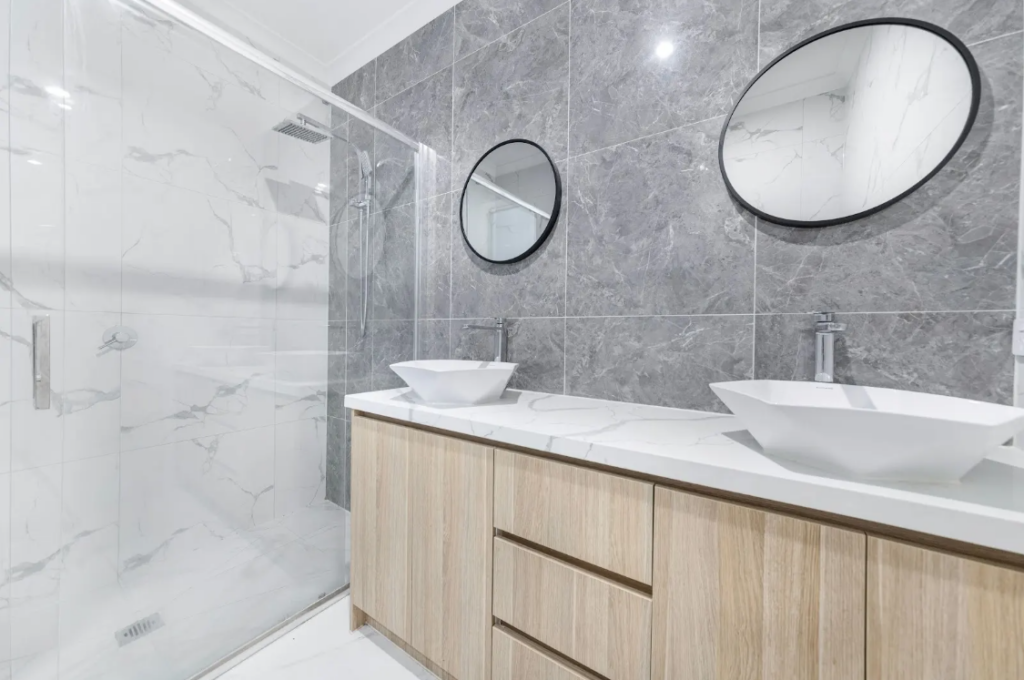
For homeowners looking for more distinctive bathroom tile ideas, porcelain tiles can recreate the appearance of materials such as marble, concrete and timber.
Ceramics International carries marble-look, concrete-look and wood-look tile styles, giving renovators several ways to introduce these finishes without using the original natural material.
Creating Feature Walls Without Overwhelming the Space
A feature does not need to cover every wall.
Using a decorative tile, mosaic or contrasting finish in a shower, niche or selected wall area can create a focal point while allowing the rest of the bathroom to stay relatively simple.
If you already have a strong vanity, tapware or other statement element, a more restrained feature tile can help keep the finished room balanced rather than having several surfaces competing for attention.
Budgeting for Your Bathroom Tile Renovation
Budget for the tiles, the quantity required and installation rather than looking at the tile price alone.
Tile Costs and Installation Considerations
Bathroom tile prices can vary considerably between different materials, collections, sizes and finishes. Setting an overall budget before visiting a showroom can make it easier to compare options without narrowing your choices too early.
Installation should also be considered separately. Ceramics International supplies tiles and provides installation advice and technical support. Allow separately for labour and discuss installation costs with your chosen tiler.
Ordering the Right Quantity of Tiles
Before ordering, make sure the tiled areas have been measured carefully and that the quantity accounts for the planned layout and any necessary cuts.
Rather than relying on the room’s approximate floor area, confirm the required quantity for the specific tile and layout with your supplier or tiler. This is particularly useful with patterned designs, feature areas and larger-format tiles.
Why Visiting a Perth Tile Showroom Can Help
Seeing tiles in person makes it easier to compare colour, texture, scale and finish. Ceramics International’s showroom at 63B King Edward Road, Osborne Park is designed with light and space for browsing, and customers can ask for samples before making a final decision.
Find the Right Bathroom Tiles in Perth
By the time you shortlist your tiles, you should have considered their intended use, material, finish, maintenance requirements and total renovation budget.
Choosing Tiles That Suit Your Home and Budget
Rather than choosing tiles based on appearance alone, consider how they will work across the whole bathroom. Think about the floor, walls, wet areas, maintenance and the overall look you want to create.
From its Osborne Park showroom, Ceramics International helps Perth homeowners compare tile materials, finishes and styles before making a final selection.
Explore Our Bathroom Tile Range
Explore Ceramics International’s bathroom tile range or visit the Osborne Park showroom to see different colours, materials and finishes in person.
For expert advice on choosing bathroom tiles in Perth, visit the showroom and find options that suit your renovation, style and budget.